Content
Beach and Ocean Safety
Duval County has 15 miles of coastline with an abundance of public access to area beaches for residents and visitors to enjoy. While our beaches provide many beach-related activities to enjoy, such as surfing, swimming, fishing, and boating- it is important to remember to partake in these activities safely.
Beach Warning Flags
Beach Warning Flags
The beaches of Duval County use a flag system to inform sunbathers and beachgoers of the current ocean conditions. Flags are located along the beach at various boardwalk cross-overs. In the absence of flags, swimmers should use extreme caution when entering the water.


Water Closed to Public
High Hazard
High Surf and/or Strong Currents
Medium Hazard
Moderate Surf and/or Currents
Low Hazard
Calm Conditions, Exercise Caution
Stinging Marine Life
Man O' War, Jellyfish, Stingrays
Rip Current Safety
Rip Current Safety
What are rip currents? Rip currents are powerful channels of fast-moving water that usually flow away from the shore. Rip currents can occur during both calm and rough conditions. Rip currents claim more lives in Florida than hurricanes, floods, tornadoes, and lightning combined.
Where do rip currents form? Typically, rip currents form at breaks in the sandbar, and near structures such as jetties and piers.
What are some clues that a rip current may be present?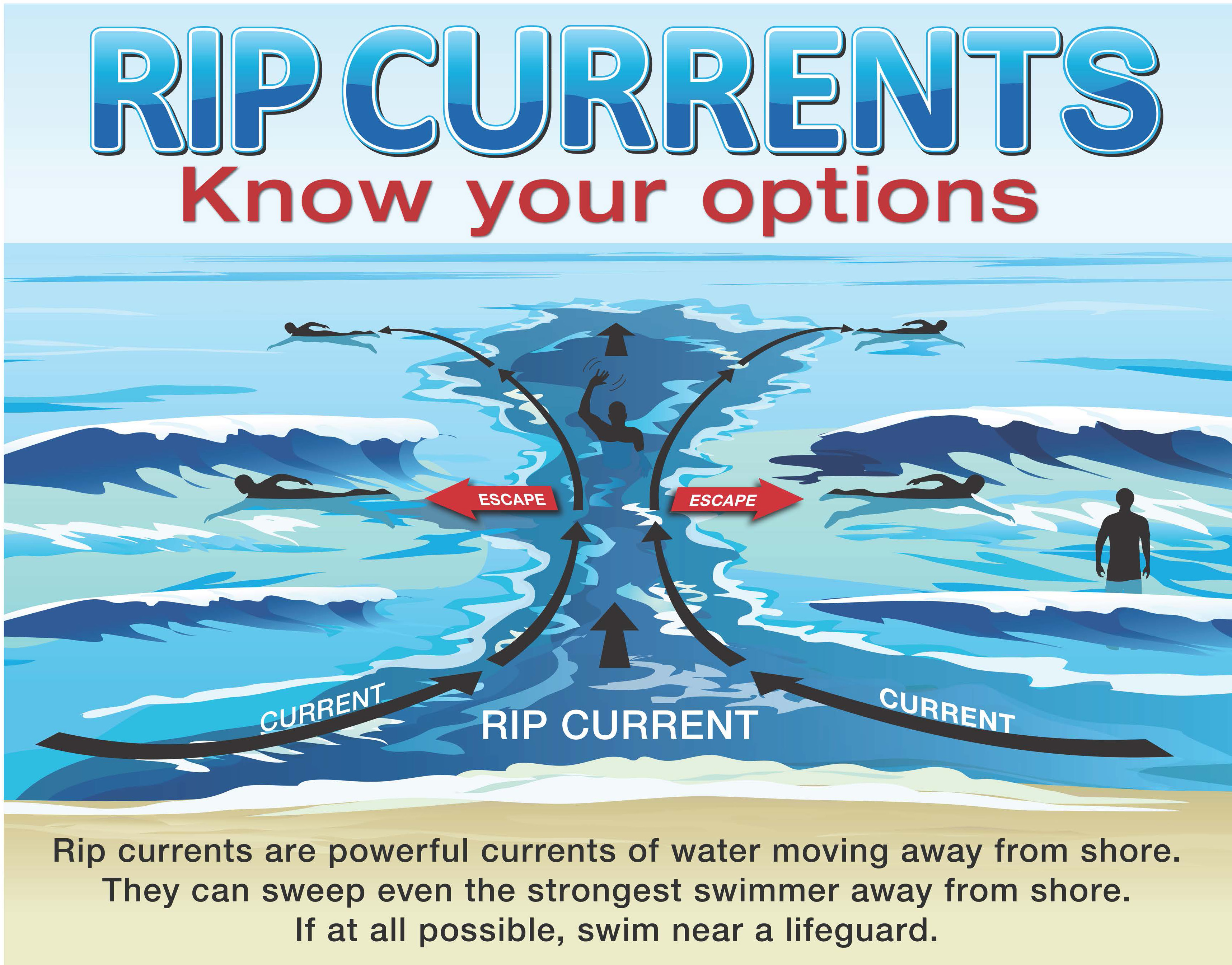
Where do rip currents form? Typically, rip currents form at breaks in the sandbar, and near structures such as jetties and piers.
What are some clues that a rip current may be present?
- No waves breaking in the area
- Unusual choppiness
- Discoloration of water
- A line of foam, seaweed, or debris moving away from the shore
- Don’t fight the current
- Swim with the current, then to shore
- If you can’t escape, float or tread water
- If you need help, call or yell for assistance
Stay Safe In The Water
Stay Safe In The Water
Try not to touch the site where you came in contact with the jellyfish. Consult the nearest lifeguard and they will treat you appropriately. Usually, treating the sting with a mixture of vinegar and saline water will alleviate the pain.
- Never swim alone
- Always swim in fron of a lifeguard
- Heed warnings from lifeguards
- Never underestimate the ocean's strength
- Never swim if lightning or a storm is approaching
- In case of emergency, call 911 if a lifeguard is not on duty. Do not attempt to rescue someone in distress
Try not to touch the site where you came in contact with the jellyfish. Consult the nearest lifeguard and they will treat you appropriately. Usually, treating the sting with a mixture of vinegar and saline water will alleviate the pain.